There’s a particular type of phone call I’ve come to recognise over the years. It comes from a number I don’t have saved. The voice on the other end is unhurried – not rude, just accustomed to being waited for. There’s a slight pause before they get to the point, as though they’ve had to think back to remember why they rang. The house is in Hampstead. There’s a carpet that needs seeing to. It’s been a while. How soon can I come?
“A while” is doing a lot of work in that sentence. I’ve turned up to Hampstead jobs where “a while” turned out to mean eighteen months. I’ve also turned up where it meant closer to fifteen years. The carpets tell you immediately which one you’re dealing with – not by smell, though that can be informative, but by the way the pile has compressed under decades of foot traffic into something closer to a mat than a carpet. By the stains that have set so thoroughly they’ve become part of the weave. By the realisation, somewhere around the third room, that what you’re looking at isn’t just a carpet. It’s a record of how someone has lived.
What a Hampstead Rock Star’s Home Actually Looks Like
Hampstead has a particular character you notice once you start working in it regularly. The houses are large – properly large, not London-large, which is its own category of disappointment. Victorian and Edwardian stock mostly, with high ceilings, original floorboards in the rooms that haven’t been carpeted, and gardens that back onto the Heath in the better streets. Houses that were impressive when they were built and have only become more so as the city around them changed.
The retired rock star bracket tends to occupy a specific tier of these properties. Not the recent conversions with underfloor heating and open-plan kitchens – the ones bought in the late seventies or early eighties, when the money was arriving faster than anyone knew what to do with it, and lived in ever since. The décor reflects several different decades simultaneously. There’s usually a period in the mid-eighties that left its mark particularly strongly.
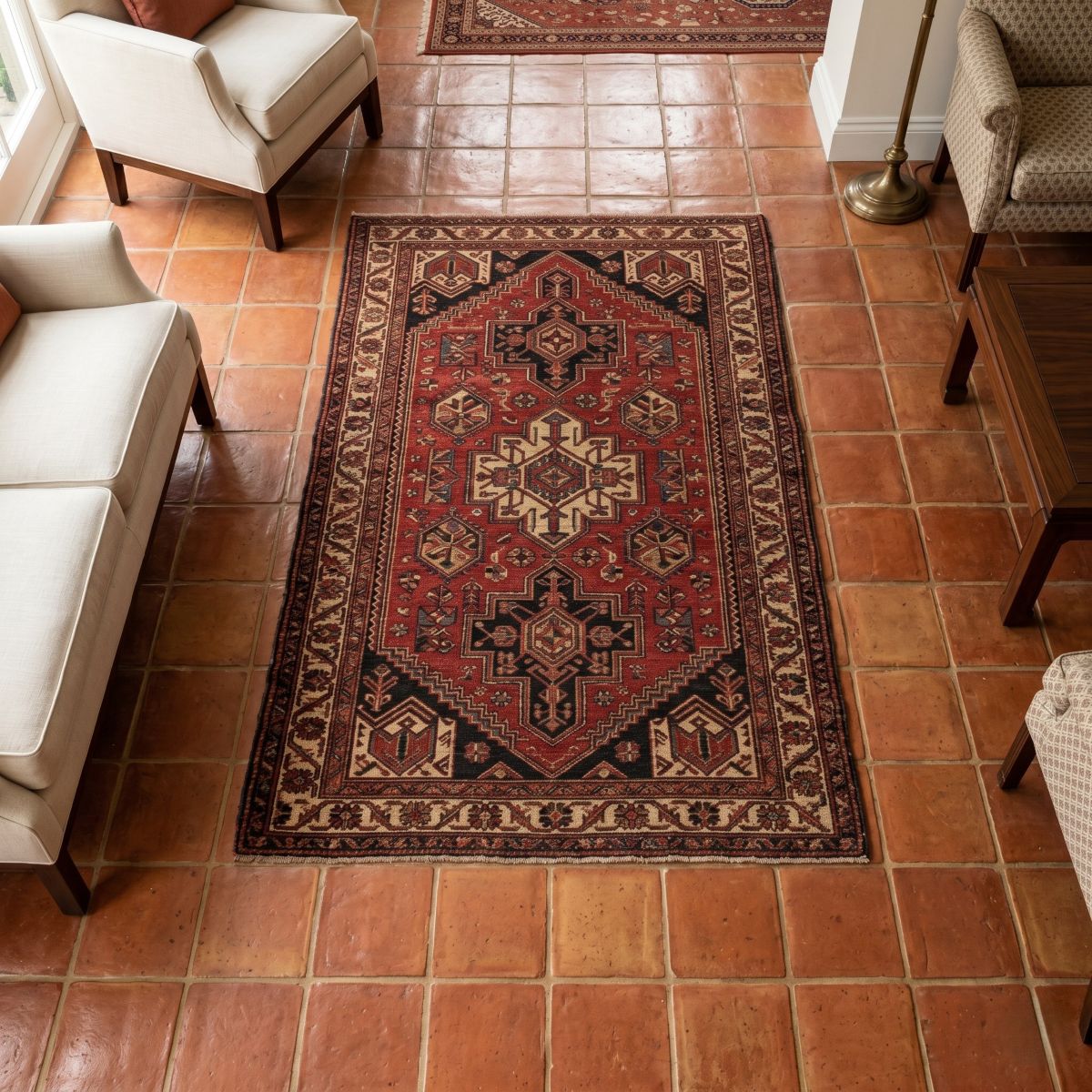
The carpets, when they were chosen, were chosen well. That’s the important thing to understand before you start. Whoever specified the flooring in these houses – the client, or an interior designer employed back when such things mattered to them – knew what they were doing. Persian runners in the hallways. Bespoke Wilton in the drawing room. Hand-knotted rugs brought back from touring in parts of the world where such things are still made properly. The quality is there. It’s just been buried.
When a Carpet Has Been There as Long as the Gold Records on the Wall
The gold records are usually in the hallway or the study. Sometimes in a studio room – and a surprising number of these houses have one, even if it hasn’t been used professionally in twenty years. They’re not displayed the way a newer artist might display them, prominently angled for visitors to notice. They’re just there, the way a clock is just there. Part of the house. Part of the inventory.
The carpets have the same quality. They’ve been there so long they’ve stopped being noticed. The Persian runner in the hallway has been walked on ten thousand times without anyone looking at it. The drawing room Wilton has had two dogs, a string of house parties, and possibly a recording session or two ground into it over several decades. It’s not that the owners don’t care. It’s that at some point the carpet became wallpaper – background to a life being lived, rather than something requiring active attention.
Why Neglect Looks Different at This Level
There’s a version of carpet neglect that comes from indifference or simply not knowing any better. That’s not what you’re dealing with in Hampstead. What you’re dealing with is the neglect that comes from abundance – from having always had good things around you for so long that you’ve stopped registering their condition.
The paradox of these jobs is that the starting point was so far above average that even thirty years of neglect still leaves you with something worth saving. A hand-knotted Afghan rug that hasn’t been properly cleaned since the mid-nineties is in vastly better condition than a cheap supermarket carpet that’s a year old. The quality of the original material carries it – but only so far.
What you find, once you get into the assessment, is that the damage is uneven. High-traffic areas – the path between the door and the sofa, the patch in front of the fireplace – have compressed pile and built-up grime that will need careful work. The edges and corners, where foot traffic rarely reaches, are often remarkably well-preserved. It’s almost like reading a map of how someone has moved through a room for thirty years.
The Problem With a Carpet Nobody Has Touched Properly Since the Nineties
Set-in staining behaves differently from fresh staining. The chemistry is different, the approach is different, and the realistic expectations for the outcome are different. Tannin stains from red wine that have been oxidising for two decades aren’t going to come out completely. They’ll lift, they’ll fade, they’ll become far less visible – but promising a full restoration to someone whose carpet has been accumulating damage since the Major government is asking for trouble.
Moth damage is another issue that comes up regularly on aged wool carpets in these properties. Carpet moths thrive in undisturbed areas – under heavy furniture, behind doors, along the edges of rooms. In a house where nothing has moved significantly in twenty years, the conditions can be ideal. I’ve found moth damage on Hampstead jobs that the owner had no idea about, because the affected areas were under furniture that hadn’t been shifted since it was delivered.
The Technical Challenge of Cleaning Aged Luxury Carpets
Old wool responds differently from new wool. The natural lanolin that gives quality wool its resilience breaks down over time, leaving the fibres more brittle and more vulnerable to aggressive cleaning methods. A carpet that would have handled a standard hot-water extraction clean perfectly well when new may be damaged by the same treatment after three decades of wear. You need lower temperatures, gentler chemistry, and a far more conservative approach to moisture throughout.
Persian and Afghan rugs present additional considerations. The natural dyes used in older pieces – and the genuinely old pieces that turn up in Hampstead homes regularly pre-date synthetic dyes entirely – can bleed if exposed to the wrong pH or temperature. Colour testing before any treatment is applied isn’t optional on these jobs. It’s the first thing you do, every time, regardless of how confident you feel about the piece in front of you.
What Three Decades of Settled Grime Does to a Hand-Knotted Wool Pile
The grime that accumulates in carpet pile over an extended period doesn’t stay at the surface. It migrates downward through the pile as foot traffic and gravity do their work, eventually settling into the foundation of the weave. Surface vacuuming – even regular, thorough vacuuming – doesn’t reach it. By the time a carpet has been down for thirty years in a lived-in house, there can be a significant layer of compacted particulate matter at the base of the pile that has effectively become part of the carpet’s structure.
Getting it out requires dry soil extraction before any moisture is introduced, followed by a controlled low-moisture clean, followed by careful grooming of the pile to restore its direction and appearance. On a large room this takes time. On a hand-knotted rug with a dense pile, it takes considerably more. Rushing it produces a carpet that looks clean from a distance and isn’t. Taking the time produces one that’s genuinely restored. The clients in Hampstead, whatever else might be said about their housekeeping, tend to know the difference.
The Part of the Job Nobody Mentions in the Invoice
Working in these homes has a quality that’s difficult to describe to someone who hasn’t experienced it. The houses feel inhabited in a way that newer, more carefully maintained properties often don’t. There are books everywhere – not for decoration, but read books, stacked and doubled and left with their spines cracked. There are instruments in corners. There are photographs on walls that are, when you actually look at them, extraordinary documents of a particular era in British music.
The clients themselves tend to be good company, in the way that people who’ve seen a great deal and no longer feel any need to perform for anyone usually are. They’ll make tea without asking whether you want it. They’ll sit in the kitchen while you work and talk about the neighbourhood, or the garden, or whatever’s on the radio. They’re not treating you like staff and they’re not treating you like a fan. They’re treating you like someone who’s come round to do a job that needs doing.
When the Conversation Turns to the Carpet’s History
It almost always does, at some point. You’re assessing a stain in the drawing room and the client, watching from the doorway, says something like: “I think that happened at the party after the Hammersmith show. Or possibly the one after that.” And then you’re getting a fragment of a story about an evening in 1987 that almost certainly involved people whose faces are on the covers of albums you own.
I don’t ask questions. I don’t push for details. But I listen, and I find that the carpet – its history, its condition, its accumulated damage – becomes something more than it was when I walked in. Every stain is a data point. Every worn patch marks a path someone walked repeatedly for years. Cleaning it properly feels less like a maintenance job and more like a small act of preservation – and in Hampstead, that’s rarely lost on the person watching you do it.