There’s a running joke among the cleaners I know who work regularly in NW8 – not a very funny one, but it persists – that you should always ask about the flooring before taking a St John’s Wood job. Not as a professional courtesy. As a form of self-preservation. Because the flooring in St John’s Wood is, with a frequency that stops being coincidental after a while, unlike anything you’ll encounter in the rest of London.
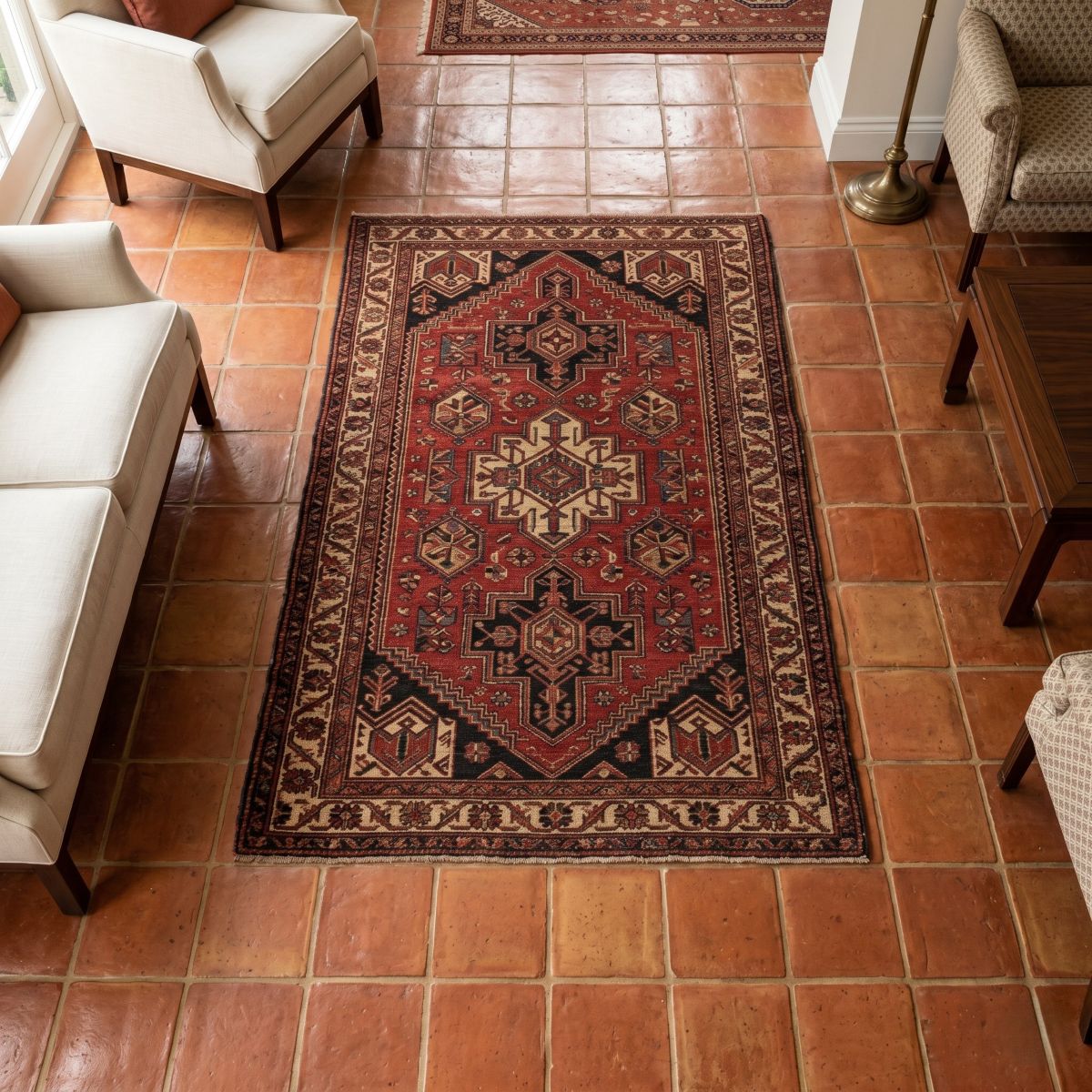
I’ve been cleaning in this postcode for years, and I’ve developed what I’d describe as a healthy respect for the unknown quantity of the floor assessment. I’ve walked into properties expecting standard domestic carpet and found hand-fired Moroccan zellige tiles running the full length of a hallway. I’ve turned up for a quick clean of a study and spent four hours on a nineteenth-century marquetry floor I had to research before I could safely touch. I’ve encountered flooring in St John’s Wood that I couldn’t identify without a phone call to a specialist, and flooring that the client themselves admitted they weren’t entirely sure about.
This article is an account of some of what I’ve found – and, more practically, what it took to clean it.
Why St John’s Wood Produces This Kind of Job
The area has a specific combination of qualities that explains, when you think about it, why the flooring is consistently extraordinary. The houses are large – properly large, detached and semi-detached Victorian and Edwardian stock with the kind of floor area that gives owners real scope to make interesting decisions room by room. The residents are, in high proportion, people who have spent careers in the music industry and have the resources and the confidence to commission and acquire unusual things.
Add to that property values among the highest in London, sustained for decades, and you get a population who bought their homes a long time ago, have never needed to make practical compromises on interior decisions, and have had thirty or forty years to layer unusual choices on top of each other. In St John’s Wood, it’s not uncommon to find Victorian encaustic tiles in an original hallway, French limestone in a kitchen added in the nineties, bespoke hardwood parquet in a music room installed by a previous owner, and a hand-knotted silk rug in the drawing room that came back from a tour of Japan in 1978. All in the same house.
When a House Has Been in the Music Industry for Fifty Years
Some of these properties have changed hands exclusively within the music world for generations – bought by a record executive in the sixties, sold to a guitarist in the eighties, passed to a producer in the early two-thousands. Each owner adds something. Each set of choices reflects their era, their taste, and the particular enthusiasms that came with their version of music industry success.
What you get, as the cleaner arriving with your assessment kit, is a kind of archaeological site. The flooring tells a story that no one living in the house has necessarily pieced together in full. I’ve stood in hallways in NW8 and thought: whoever laid those tiles is long gone, the person who added that marble threshold probably doesn’t remember doing it, and the client who booked me has no idea what’s under the rug in the back reception room. That uncertainty, I’ve learned, is my job to resolve before I touch anything.
What I’ve Actually Found – Some Specific Examples
The Moroccan zellige I mentioned came from a house on a quiet street behind the studio. The client – a music publisher with an impressive collection of instruments she didn’t play and a very relaxed attitude to cleaning schedules – had commissioned the tiles from an artisan maker in Fez during a trip in the late nineties. Hand-fired, hand-cut, deeply irregular in surface and thickness, and laid in a geometric pattern her kitchen designer had apparently spent three weeks working out. They were also, by the time I arrived, covered in cooking residue, candle wax, and a thin layer of rosin from a cello that lived in an adjacent room.
Zellige is porous, delicate, and finished with a glaze that varies in thickness across each individual tile. The wrong product will strip the glaze unevenly. The wrong temperature will expand the clay body and cause crazing. I spent an hour researching before I started and another twenty minutes doing test patches in a corner behind the door. The result was good. The process was considerably more tense.
The Floor That Made Me Question Everything I Thought I Knew
The marquetry study floor was the job that changed my understanding of what unusual could mean in this postcode. The house dated from the 1880s and the floor appeared to be original to the building – an intricate geometric inlay in five different wood species, including what I later confirmed was rosewood and a pale timber I couldn’t identify at all. It was in reasonable condition for its age but had been incorrectly cleaned at some point recently, leaving a residue of the wrong product worked into the grain of the lighter timbers.
I’ve cleaned hardwood floors, parquet, oak boards, engineered wood, bamboo. This was none of those things, and the methods appropriate to modern hardwood would have made the situation significantly worse. I rang a specialist conservator I know who works with antique furniture, described what I was looking at, and took her advice. That phone call almost certainly saved the floor. It also added two hours to a job I’d quoted for one – which is a conversation I’ve learned to have in advance whenever St John’s Wood is involved.
Why Each Unusual Material Demands a Completely Different Approach
The technical problem with unusual flooring isn’t simply that the material is unfamiliar. It’s that the risk calculation is entirely different from a standard job. If I make a mistake on a domestic carpet that cost six hundred pounds, the consequence is a difficult conversation and a replacement. If I make a mistake on a hand-fired antique tile that can’t be replicated, or a nineteenth-century marquetry floor that took a craftsman months to lay, the consequence is irreversible damage to something that cannot be made right.
That changes how you approach the assessment. On a standard job, I’m looking at condition, staining, and pile type. On an unusual floor in St John’s Wood, I’m also asking: what is this made from, how was it made, how old is it, what’s been done to it previously, and is there anyone I should speak to before I start? That last question is not rhetorical. I’ve rung manufacturers, conservators, and on one occasion a museum conservator who spent fifteen minutes on the phone helping me understand the composition of a stone floor I was looking at. I don’t make these calls lightly. But I make them.
Why a Standard Training Course Won’t Prepare You for NW8
Professional carpet and floor cleaning training is thorough on the materials you encounter in most domestic environments – wool, synthetic fibre, sisal, standard ceramic tile, engineered wood. It covers the common ground well. What it can’t cover is the full range of what you’ll find in a postcode where residents have been importing unusual materials from around the world for the better part of half a century.
The knowledge that fills that gap comes from experience, from research, from professional networks, and from the willingness to say I’m not sure about this and find out before proceeding. It’s a slower way to work. It’s also the only way to work in St John’s Wood without eventually doing something you can’t take back.
The Abbey Road Effect
You can’t write about St John’s Wood without acknowledging what sits at its centre. Abbey Road Studios has been at the end of that street since 1931, and its presence has shaped the area’s identity in ways that go well beyond the zebra crossing and the tourists photographing it. The studio is why musicians came to live in NW8 in the first place – proximity to the work, to the people, to the particular creative gravity that a building like that generates over decades of history.
The effect on interior design is real and sometimes literal. I once cleaned a music room two streets from the studio where the owner – a producer whose career went back to the seventies – had commissioned bespoke hardwood flooring using timber reclaimed from a demolished recording facility elsewhere in London. The floor had, in other words, been recorded on before it was walked on. He mentioned this in the same tone you might use to say the tiles came from Portugal. I found it difficult to receive the information in quite the same spirit.
What It Feels Like to Clean a Floor That History Walked Across
I’m not given to excessive sentiment on the job. A carpet is a carpet. A floor is a floor. But there are moments in St John’s Wood that test that professional detachment in ways that don’t happen anywhere else in London.
I once cleaned the entrance hall of a house that had been owned, in sequence, by three musicians whose names are part of the permanent record of British popular music. The current owner mentioned this while I was assessing the original Victorian encaustic tiles – which had been there through all of it, absorbing fifty years of the music industry walking across them. I did the job carefully and thoroughly, as I always do. But I thought about those tiles all the way home, and I’m thinking about them now. Some floors carry more than dirt. In St John’s Wood, that isn’t sentiment. It’s just the truth.