Every year, without fail, the week after the BRIT Awards is the busiest week of my calendar. Not the week of the awards – the week after. The calls start on the Thursday morning, occasionally the Wednesday night if the party went on particularly long, and by Friday I’m booked solid through the weekend. I stopped being surprised by this around the third or fourth year. Now I plan for it the way other people plan for Christmas.
The calls come almost exclusively from two postcodes: Chelsea and Knightsbridge. SW3 and SW1X, if you want to be precise about it. I’ve had the occasional one from Belgravia, and once a genuinely memorable job in a Sloane Square flat that I still think about from time to time, but the bulk of them – the urgent ones, the ones where the person on the phone is doing their best to sound calm while clearly not being calm – come from those two areas.
There’s a reason for that, and it isn’t complicated. Chelsea and Knightsbridge are where a significant portion of the UK music industry lives, entertains, and – in the days following the biggest night in the British music calendar – deals with the consequences of both.
Where the BRIT Awards Actually End Up
The official afterparties get the coverage. Every year there’s a sanctioned event somewhere in central London – a private members’ club, a hotel ballroom, somewhere with a guest list and a photographer from a music magazine stationed at the door. Those parties run until two or three in the morning. The real ones, the private ones, start when the official ones wind down.
By half two, the cars are heading southwest. Artists, executives, managers, and whoever managed to attach themselves to the right group at the right moment are decanting into townhouses and penthouses across Chelsea and Knightsbridge. The hosts – usually someone who’s been in the industry long enough to have acquired both a large property and a well-established reputation for hospitality – will often have had a catering team in during the day laying the groundwork.
What follows is the kind of party that doesn’t make the press because nobody there is particularly interested in it making the press. There’s no photographer. There’s no guest list on a clipboard. There’s very good champagne, a great deal of noise, and by the time it ends – typically as the light is starting to come up over the river – there is also a carpet situation of some significance.
What a Private Afterparty in a Chelsea Townhouse Looks Like at Seven in the Morning
I’ve arrived at enough of these to have a clear picture before I’ve even opened the front door. The hallway will have taken the first wave – shoes near the entrance, a coat on the floor rather than the rack, the first champagne spill near the bottom of the stairs where someone’s glass caught the banister. The main reception room will be the full story. Glasses on every surface. Plates that didn’t make it back to the kitchen. The particular visual chaos that comes from forty or fifty people in formalwear deciding to stop performing and start relaxing at the same time.
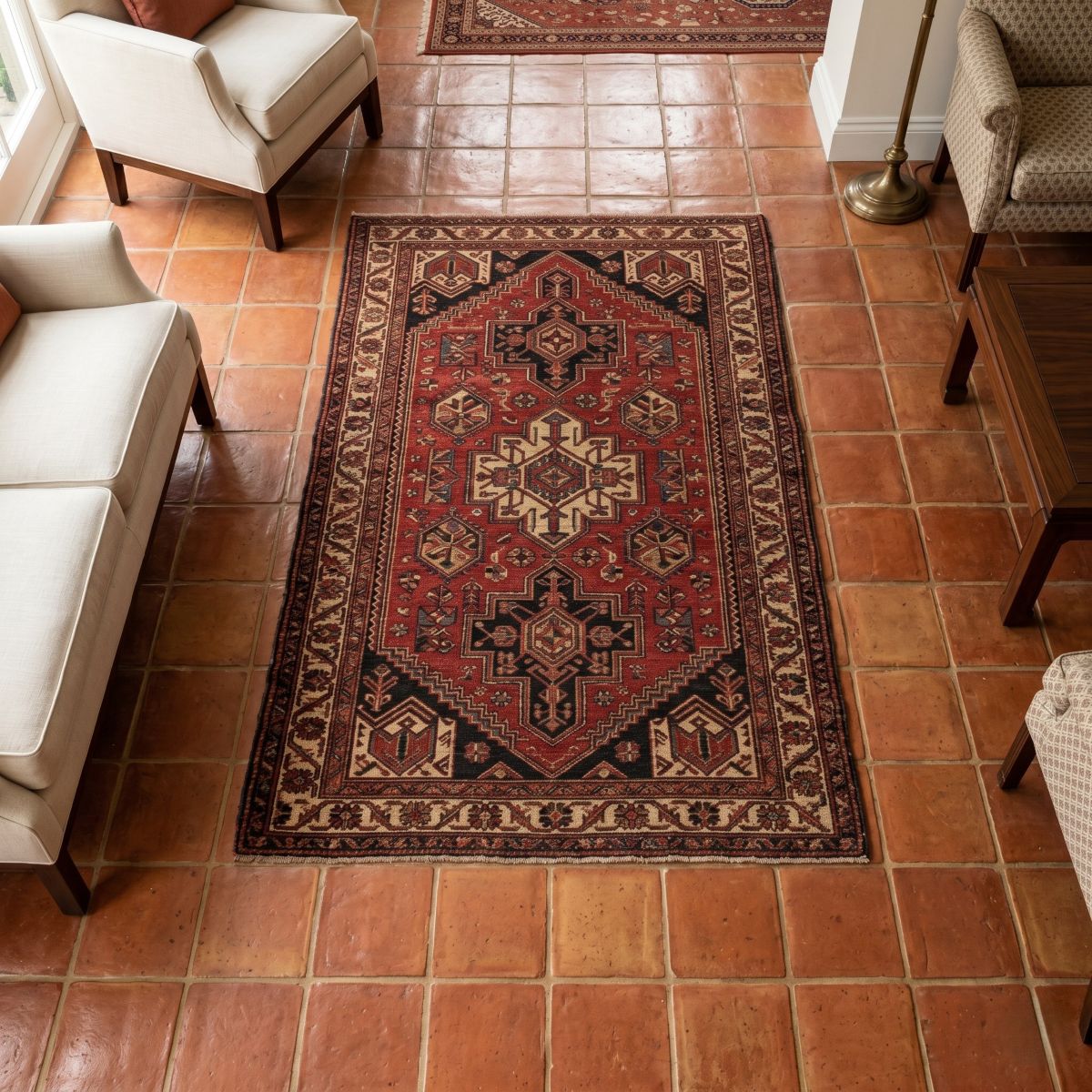
The carpets in these rooms are, characteristically for SW3, exceptional. Antique rugs from Istanbul or Tehran, bespoke fitted Wilton in soft heritage colours, the occasional statement piece that cost more than most people’s annual salary and is now sitting under a crust of dried champagne and what appears to be the remains of a cheese board.
Why Nobody Ever Plans for the Cleaning
This is the thing I’ve come to understand about the post-BRIT call pattern: it isn’t that these clients are irresponsible or disorganised. In their professional lives, most of them are the opposite. It’s that the BRIT Awards creates a specific mindset – an end-of-season release of tension that’s been building since the nominations were announced – and in that mindset, nobody is thinking about what the carpet will look like on Thursday morning.
The awards ceremony is months of anticipation compressed into a few hours. If you’re attending, you’ve been managing your appearance, your schedule, your expectations, and your public face for weeks. When it ends – whether your artist won or didn’t, whether the performance landed or not – the immediate instinct is to release all of that at once. The party that follows is the pressure valve. Nobody standing in a Chelsea townhouse at three in the morning, glass in hand, surrounded by people they’ve spent their career alongside, is thinking about carpet maintenance.
What “I Need Someone Here Today” Actually Means in Knightsbridge
The call has a specific quality I’ve come to know well. There’s an attempt at composure that doesn’t quite hold. “The place is in a bit of a state” is doing the same work as “a while” does in the Hampstead calls – a significant understatement wearing polite clothes.
“Today” is the operative word, and it means exactly what it says. These clients aren’t ringing to book something for next week. They’re ringing because people are coming to the house this evening, or because the owner is returning from wherever they stayed after the party, or because the housekeeper has seen the state of the place and issued something close to an ultimatum. The urgency is real, the timeline is tight, and the job that needs doing in six hours would comfortably take eight if approached at a normal pace.
What Makes Post-BRIT Jobs Technically Distinct
Awards season creates a specific type of mess that’s different from a standard house party. The attire alone changes things. Black tie and formal gowns mean more cosmetic transfer – foundation on sofa cushions, lipstick on glassware that didn’t make it to the sink, and the particular combination of fake tan and sequined fabric that can leave a mark on a light-coloured carpet that takes some considerable working out.
Sequins are, from a cleaning perspective, an almost poetic problem. They’re small, lightweight, and migrate into carpet pile with remarkable efficiency. They catch the light in a way that makes them visible from across the room even after you think you’ve dealt with them. A single heavily embellished dress in a carpeted room can shed enough material to create work that outlasts the memory of whoever was wearing it.
Why Glitter, Confetti, and Awards-Night Cosmetics Are a Carpet Cleaner’s Particular Nightmare
The BRITs have developed a long-standing tradition of production spectacle involving confetti, pyrotechnics, and enough glitter to resurface a small car park. Artists come home from the ceremony carrying traces of all of it. It transfers to car seats, to hallway floors, to the carpets of whatever room they end up in at four in the morning.
Metallic confetti is especially persistent. Unlike paper confetti, which breaks down and vacuums out reasonably well, metallic foil confetti compresses into carpet pile and holds. Standard vacuuming retrieves some of it. The rest requires working through the pile section by section – a fine-tooth comb approach, sometimes literally. On a large room with a dense carpet, on a tight timeline, that particular detail tests your patience and your time management in equal measure.
The Pattern – and Why I Now Plan Around It
The BRIT Awards fall in late February or early March. It’s been that way long enough that I now block the following week in my diary from January. I order additional stock of the products I know I’ll need – upholstery treatment, low-VOC carpet solution, the specialist cosmetic stain remover I’d normally go through once a year and sometimes use three times in a single Chelsea week. I make sure my equipment is serviced before February. I don’t book holidays in that window.
I’ve mentioned this system to other cleaners over the years. The ones who work regularly in SW3 and SW1X already know. The ones who don’t tend to look mildly sceptical, then ring me the following March to ask which products I use on cosmetic transfer.
What Eleven Years of Post-BRIT Cleans Have Taught Me About These Two Postcodes
The practical knowledge accumulates in ways that are difficult to codify but easy to draw on. I know that certain streets in Chelsea have entrance hall flooring that water-spots badly and needs an immediate dry buff after any damp treatment. I know that the older Knightsbridge mansion blocks have communal carpet in the lifts that building management will ask about if I’m seen bringing equipment through, so it’s worth a quick call ahead. I know that these jobs consistently run longer than they look on paper, because the formal rooms in these properties are large, and large rooms after large parties take the time they take.
What I’ve also learned, though it doesn’t appear on any invoice, is that these jobs carry a particular atmosphere. The mess is the residue of something that genuinely mattered to the people who made it – a significant night in an industry they’ve given their careers to, with people they’ve known for years. Cleaning it up is, in its own quiet way, closing the chapter on that evening and returning the house to itself. Year after year, I find I don’t mind that at all.