Mayfair, six in the morning. The streets are empty, the doormen are half-asleep, and the only people moving are the ones who never really went to bed and the ones like me – arriving to deal with the aftermath of both. I pulled up outside a Park Lane-adjacent block last spring, gear loaded in the back, thermos in hand, and took the lift to the fourteenth floor. The doors opened and the smell hit me before anything else. Champagne. Candle wax. Something floral that had turned slightly stale. And underneath all of it, that warm, close scent that every cleaner knows – the unmistakable signature of a room that’s had far too many people in it for far too long.
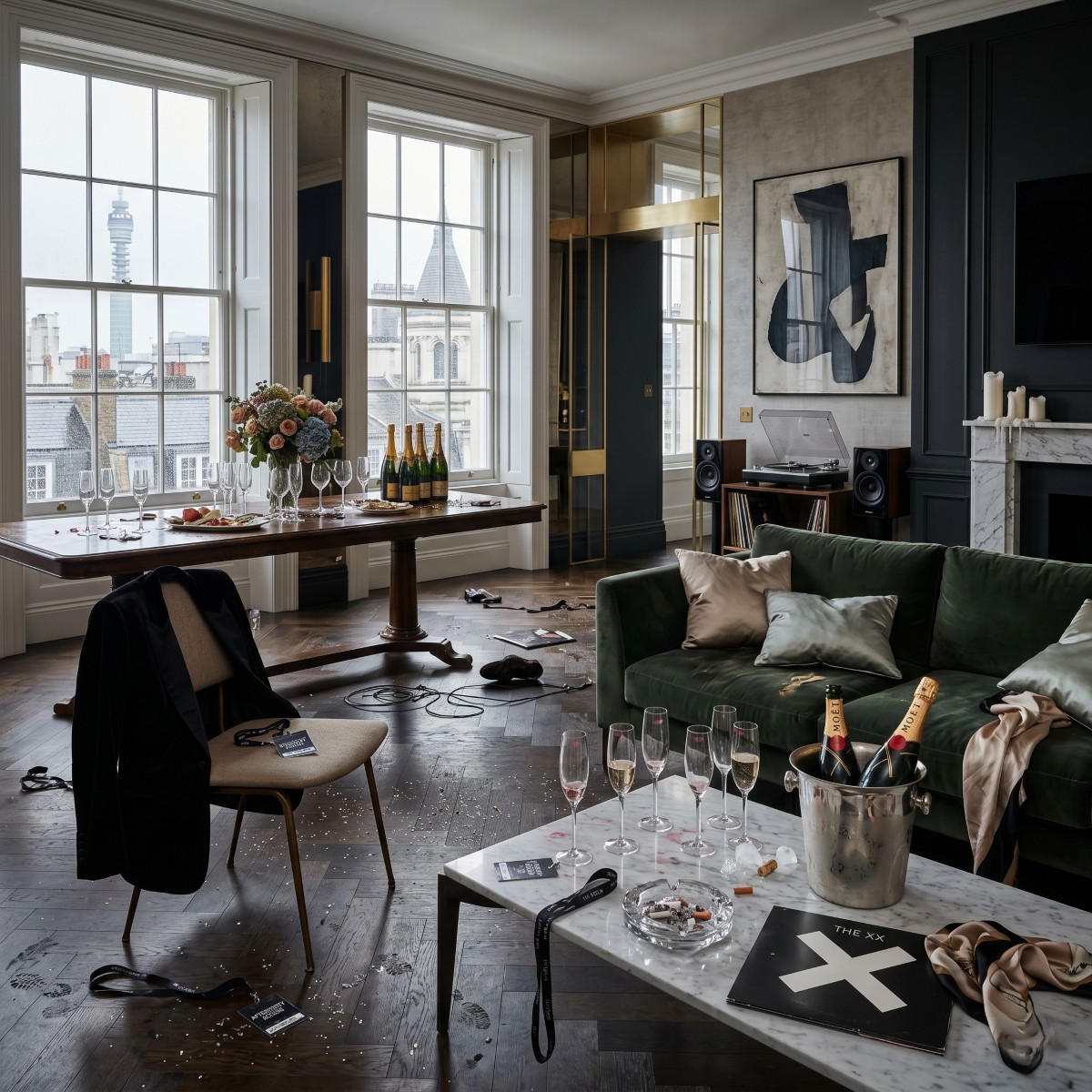
The flat belonged to a music executive whose name I won’t be sharing. The night before had been an album launch – a proper industry affair, the kind where the guest list reads like a roll call from the BRIT Awards nominees and the drinks don’t stop until someone decides they should. By the time I arrived, the last stragglers had gone. What they’d left behind was the full story of the evening, written in red wine, abandoned glasses, and ground-in canapé crumbs across about four thousand square feet of some of the most expensive real estate in London. My job was to make it disappear before noon.
What a Mayfair Penthouse Looks Like the Morning After
Album launches in Mayfair aren’t like birthday parties in Bermondsey. The scale is different, the surfaces are different, and – crucially – the expectations the morning after are entirely different. Nobody hosting an industry night in a rented penthouse off Grosvenor Square expects the place to look lived-in by lunchtime. They expect it to look like the party never happened.
The living room was the obvious starting point. Two cream sofas had taken a fair battering – a red wine splash on one arm, something that looked like a chocolate ganache smear pressed into a cushion, and a faint ring on a side table where a glass had clearly sat for several hours without a coaster in sight. The floor-to-ceiling windows were smudged at shoulder height, which told me someone had leaned against them for a good while, probably admiring the view of Hyde Park fading into the dark.
There was glitter on the kitchen island. There is always glitter. I’ve cleaned enough music industry events to know that glitter is essentially the industry’s calling card – it gets everywhere, adheres to everything, and shows up three weeks later in places it has no right to be.
What the Damage Actually Looks Like Up Close
The carpet – a pale stone Axminster running the full length of the main reception room – had taken hits in at least six separate spots. Champagne near the entrance, which is almost always the entrance. Red wine in two places by the windows. Something dark and sticky near the kitchen island that I chose to be optimistic about until I crouched down to check. The terrace doors had been open during the evening, which meant a fine layer of London grime had drifted in and settled across the threshold – the kind you only notice when you get low and look along the pile at the right angle.
In the master bedroom, which had been used as a cloakroom for the evening, there were heel scuffs along the parquet near the door and a trace of face powder worked into the bedside rug. One of the bathroom taps had been left running, leaving a chalky residue across the marble basin surround. Everywhere I looked, there was something small but wrong, and the job was to find every last one of those things before the owner’s housekeeper arrived at eleven.
Why Mayfair Properties Demand a Different Approach
There’s a version of this job where you walk in with your standard kit, work through the checklist, and leave satisfied. That version doesn’t exist in W1. The materials you encounter in these properties – the textiles, the stone, the flooring – demand a level of care that turns a straightforward clean into something closer to conservation work. Standard methods that would be perfectly adequate in any other part of London simply don’t apply here.
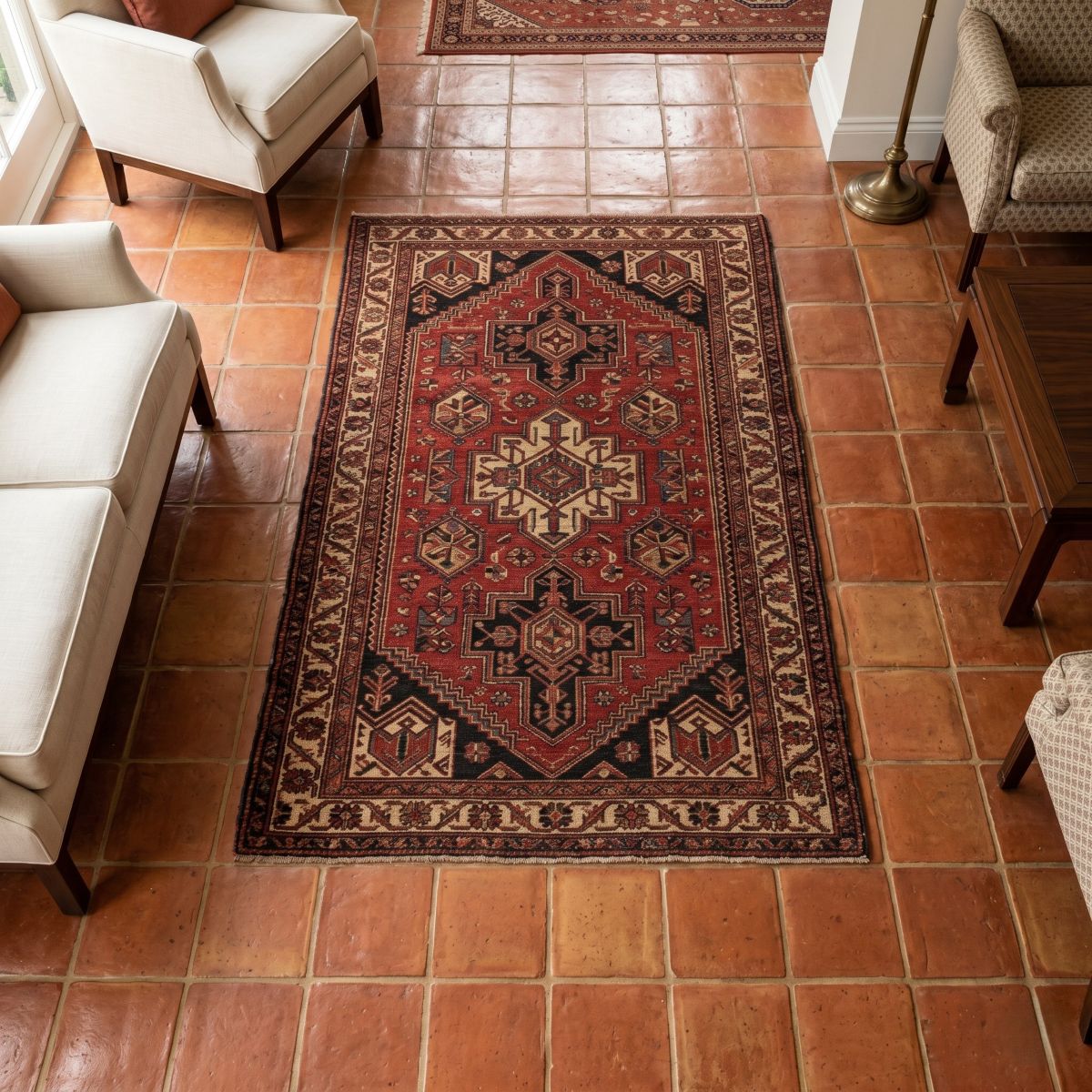
The carpets in Mayfair penthouses are rarely the kind you can hit with a strong alkaline solution and hope for the best. Persian and Afghan rugs show up regularly – antique ones, often, that need cold-water treatment and a very light touch. Hand-knotted wool doesn’t respond well to aggressive chemistry. Neither does silk, and you’d be surprised how often silk rug panels turn up in rooms that clearly see a lot of foot traffic from people who aren’t especially precious about where they stand.
When the Carpet Costs More Than a Family Car
The Axminster in this particular flat was priced – according to the building manager, who mentioned it helpfully and with obvious anxiety – somewhere in the region of twelve thousand pounds. That information doesn’t make the job easier. What it does is sharpen your focus considerably.
For that kind of carpet, you work with pH-neutral solutions, low-moisture methods, and a great deal of patience. The aim isn’t to saturate and extract – it’s to lift staining without disrupting the pile structure or leaving any trace of the treatment itself. On a cream ground, any residue shows. Any over-wetting shows. Any aggressive brushwork shows. You work in sections, check your results in natural light, and move methodically from the perimeter inward. It takes longer than most clients imagine, and it has to.
The Clean-Up – What It Actually Takes
People tend to assume that cleaning up after an event is a matter of running a hoover round and wiping down the surfaces. On a standard job, that’s close enough. On a post-launch clean in a Mayfair penthouse, you’re looking at a methodical process that covers soft furnishings, hard floors, wet rooms, kitchen surfaces, and every piece of glass in the place – and that’s before you start on the carpets themselves.
Soft furnishing treatment comes first, because sofa stains need attention before they dry any further into the fibres. Upholstery cleaner applied with a soft cloth, no rubbing – blotting only, always working from the outside of the stain inward to avoid spreading it. The ganache responded well. The red wine required two passes and a dry-powder treatment to pull the residue out of the weave properly. The sticky patch near the kitchen island turned out to be a dark berry cordial, which is manageable on a light carpet if you catch it before it oxidises. I caught it, just about.
Why Speed and Discretion Have to Work at the Same Time
Here’s the part of these jobs that rarely gets talked about: you’re not just racing the clock. You’re also working around people. A PA arrived at half seven to start organising the flat for the client’s return. A security consultant turned up at eight to check the property. Neither of them wanted to be navigating a full cleaning operation, and I didn’t want to be in their way.
That means working quietly, moving equipment efficiently, and communicating without being disruptive. You don’t block the hallway with your trolley. You don’t run the extraction machine when someone’s on a phone call in the next room if you can reasonably avoid it. You develop a kind of spatial awareness about who’s where and what they’re doing, and you fit the noisier elements of the job into the gaps. It isn’t something anyone teaches you – it’s something you learn after turning up to enough of these situations and getting the timing wrong a couple of times.
Getting It Back to Showroom Condition Before Noon
By about half nine, the carpets were treated, the upholstery was done, and I was working through the bathrooms. Marble responds well to a neutral stone cleaner and a soft microfibre cloth – nothing abrasive, nothing acidic, nothing that will etch the surface or degrade the sealant. The basin surrounds came up cleanly. The en suite floor tiles needed a second pass near the door where something dark had been tracked in overnight.
The kitchen was more manageable than expected. Catered events tend to leave less mess than people imagine, because the catering team generally does a basic clean-down before they leave. What remained was surface residue – fingerprints across the induction hob, a sticky patch on the far worktop, and the interior of the extractor hood, which nobody ever remembers to clean but which quietly collects everything.
The Finishing Touches Nobody Notices (Until They’re Missing)
The last half hour of a job like this is about the things that don’t register as cleaning but make the difference between a flat that feels restored and one that merely feels less messy. The interior faces of the windows were cleaned in full. Cushions were straightened and plumped back into position. The bedroom rug was re-aligned with the bed frame, using the compression marks in the pile to judge where it had sat before. Any furniture that had been shifted was moved back to where it belonged.
The champagne flutes that hadn’t made it to the kitchen were gathered, washed, and returned to the cabinet. The remaining candles were straightened. The terrace was swept and the outdoor furniture wiped down, because even in April, Mayfair collects enough overnight grit to leave marks on a glass-topped table.
By five to eleven, the flat looked – as far as I could judge – exactly as it had looked the morning before the launch. The housekeeper arrived, walked through without a word, and gave me a nod on the way out. In this line of work, that nod is worth more than a five-star review.